How Change Really Happens
 |
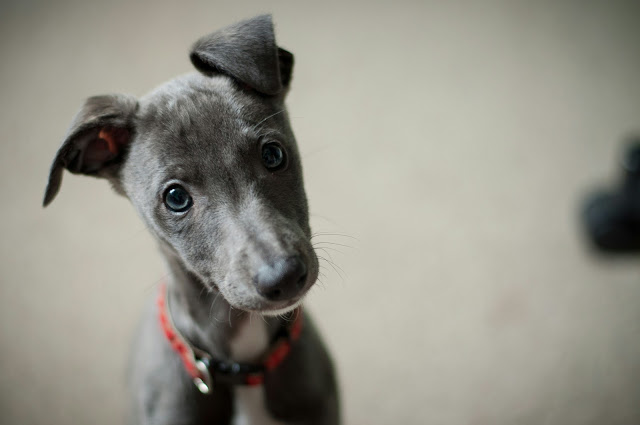
| Can't you see I'm perfect? Why would I need to change? Photo by Gary Bendig on Unsplash |
Action vs Motivation
You don’t become what you want to be by mentally willing yourself to be different.
You become what you want to be by acting like the person you want to become — and then watching yourself behave differently.
This is not the quote of some wise sage; it didn't come from a leather-bound book written by a man with a beard who lives on a mountaintop and drinks tea made from bark.
It’s what I’ve learned through my own personal experience.
Motivation
We live in a society that would have us believe we must first feel like the thing we’re trying to become before we can take action in line with it.
This is where motivation comes in.
Motivation is a big thing in our society. There are approximately nine billion books (I counted), audio programs, seminars, podcasts, retreats, webinars, and Instagram reels devoted to teaching us how to get motivated enough to do the things we already know we want ourselves to do.
We think we must first become that which we want to be, and then we will act accordingly.
But it’s the other way around.
We must first act the way we want to be, and then — slowly, stubbornly, sometimes awkwardly — we become that which we want to be.
I understand that this sounds like a lot of esoteric word-play, so let me explain.
I Was a Human Sloth
Growing up, I was not an athletic child.
I was awkward and clumsy. (Was that wall always there?)
I had no coordination, no natural athletic ability, and no desire to test either of these things in public.
This meant, of course, that I was always the last picked for a team in gym class. The team captains would actually argue with each other over who had to take me.
“We took her last time. It’s your turn.”
I felt so humiliated and rejected in those moments that if a trapdoor had appeared under my feet and dropped me directly into the centre of the earth, I would have considered it a kindness.
And it wasn’t just the kids at school. My father and brother were no better. They teased me mercilessly for my clumsiness and lack of athletic ability.
So I concluded that movement beyond simple walking was not for me.
I was not an athlete.
And so, naturally, I became a sloth.
I moved as little as possible. Literally. I never did any kind of physical activity. I never joined sports teams. I wanted nothing to do with any of it.
Sports? No thank you.
Running? Not unless I'm being chased.
Voluntary sweating? Suspicious behaviour...
 |
| You got a problem with sloths? Photo by Daniel Tischer on Unsplash |
The Bus Sprint That Nearly Ended Me
Fast forward to my mid-twenties.
I was in a job I didn’t like, and all I dreamed of was travel and adventure. I had worked on a cruise ship after graduating from college (read about my experiences here and here), and I wanted to see even more of the world.
Then, one brutally cold week in January, I had a moment of reckoning that started my fitness journey.
It was freezing outside, and I made an all-out sprint to catch my bus because I didn't want to stand there waiting another 20 minutes in the cold.
That sprint levelled me for the rest of the night.
Two minutes of full-out running and I was ready to die.
Not “a little winded.”
Not “pleasantly challenged.”
Ready. To. Die.
Earlier that same week, I had walked up three flights of stairs at work because the elevator was broken, and I was winded by the time I got to the top.
On both occasions, I was tired and sore the next day.
From stairs.
And a bus.
That was my wake-up call.
I had read a magazine article that said your level of fitness isn’t determined by what you can do, but by how long it takes you to recover from what you’ve done.
And I realized that with my current level of physical fitness — or lack thereof — the travel and adventures I dreamed of having were not going to happen.
There was no way I was going to walk for hours exploring a new city.
No way I was going to climb stairs to visit monuments or temples.
No way I was going to have grand adventures if I required a nap and a medical team after chasing public transportation.
I didn’t see myself as an athlete.
But I decided I needed to do something.
I Didn’t Become an Athlete First
Now understand, I didn’t set out with the intention of becoming an athlete.
I only knew I had to change something.
Luck is when preparation meets opportunity, and I had to prepare for the life I wanted.
So I joined a local running club and took their 10-week “Learn to Run” class — because yes, when you have lived as a sloth your whole life, you need to teach your body how to run for a sustained period of time.
I showed up every week, and every week the total running time increased.
The first week, we only ran for one minute and then walked for one minute, for a total of 20 minutes.
In order to keep up with the progress of the class, we had to do two more identical runs on our own before the next session.
And over the course of 10 weeks, we went from running one continuous minute to running for 20 continuous minutes.
It wasn’t easy.
There were weeks I was so sore.
There were some runs where what I was doing could not honestly be called “running.” It was more like hobbling with ambition.
But I had a strong why: adventure and travel.
So I kept at it.
And when the course was completed, I signed up for a 5 kilometre race.
And I ran that race.
Now, I didn’t break any records. No one from the Olympic committee called. There were no slow-motion cameras or inspirational music swelling in the background.
But I completed it.
And I cried when I crossed the finish line because I thought: “They were wrong about me.”
My family. Those kids in gym class. Everyone who treated me like I was doomed to remain a human sloth.
They were wrong.
And if they were wrong about me in this, what else were they wrong about?
 |
| Wait for me, I'm coming! It's the fur; it's slowing me down! Photo by Haberdoedas on Unsplash |
Action Came Before Identity
After that race, I admit my running dwindled from three times a week to very rarely. (Sloth habits are hard to break.)
But then I said to myself: “I spent a lot of time and energy developing this level of physical fitness, and I’m not giving it up.”
So I started running regularly again.
And then something happened.
I went from doing it because I needed to, in order to achieve a bigger goal, to actually enjoying it.
Wanting to do it.
That’s how you know a real change has happened: when you don’t need motivation anymore because the habit you’ve been trying to convince yourself to do has become something you now want to do.
For me, this has led to a lifetime journey of becoming a very athletic person.
I now strength train, spin, hike, bike, and do yoga regularly.
Movement is the most important — and sometimes the best — part of my day.
But I didn’t begin by telling myself, “Right. Now you are an athlete, and you will exercise every day.”
First, I found a strong why.
I had a reason to take the new action.
That why kept me from giving up on the days when I was tired and sore and simply didn’t wanna do it no more.
Second, I took the actions, even though they were often uncomfortable.
I had committed, and I was determined to follow through.
And because of those two things, my life changed.
Discipline Comes First. Desire Comes Later.
I went from being someone who didn’t want to move to being someone who feels that missing a workout is a punishment.
It took discipline to develop the habit.
But now that the habit is in place, no discipline is required.
That’s the way it is with all new things.
You must take that which is unfamiliar and make it familiar.
Habits are hard to break because they are familiar. They are known. They are easy. They are the grooves our lives naturally fall into when we aren’t paying attention.
Creating a new habit means carving a new groove.
At first, it feels awkward. Forced. Unnatural. Like you’re pretending to be someone you are not.
But that’s the point.
You are practicing being someone new.
You don’t wait until you magically feel like that person. You act in alignment with that person until, eventually, the action becomes familiar.
Then the familiar becomes automatic.
And the automatic becomes identity.
You Become What You Practice
The way to create a new habit is to find a very strong why and take persistent action in the direction of your goals.
Not perfect action.
Persistent action.
You do the thing badly.
Then you do it awkwardly.
Then you do it again.
And again.
And again.
Until one day, the new thing isn’t a new thing anymore.
It’s simply what you do.
It’s who you are.
You don’t become different by sitting around thinking yourself into a new identity.
You become different by behaving differently, long enough that your brain has no choice but to update the story it has been telling about you.
I was not an athletic person who decided to start running.
I was a non-athletic person who started running — and, over time, became athletic.
That distinction matters.
Because it means you don’t have to wait until you feel ready.
You don’t have to wait until you feel motivated.
You don’t have to wait until you believe a new story about yourself.
You can start acting in the direction of the person you want to become, and let the belief catch up later.
Our lives are nothing more than the sum total of our habits.
So choose the habits that point you toward the life you want.
Then practice them until they become familiar.
Then keep practicing until they become you.
 |
| I know who I am. Photo by Alexas_Fotos on Unsplash |
For more on changing your mindset and imagining good things click ⭐ here ⭐ to get my guide on Visualizations — yours FREE with subscription to my site.
Hey Friend! Thanks for reading. If you loved 💙 this post, why not subscribe? I promise to keep showing up for you with high-quality, thought-provoking content. Because every day is a good day to feel your best.



Comments
Post a Comment
Hey there! Thanks for taking the time to provide your feedback.
Your comment will be published after review.